Newsletter
Get new agent engineering posts in your inbox
Occasional practical notes on secure agent runtimes, orchestration, and AI engineering.
What a Multi-Agent Run Looks Like: Threads and Traces
One topic, four threads and ten trace events — reading a multi-agent run from the outside, and the three failure shapes worth knowing how to diagnose.
Agent-to-Agent Communication: Inboxes, Turns, and Why Nobody Waits
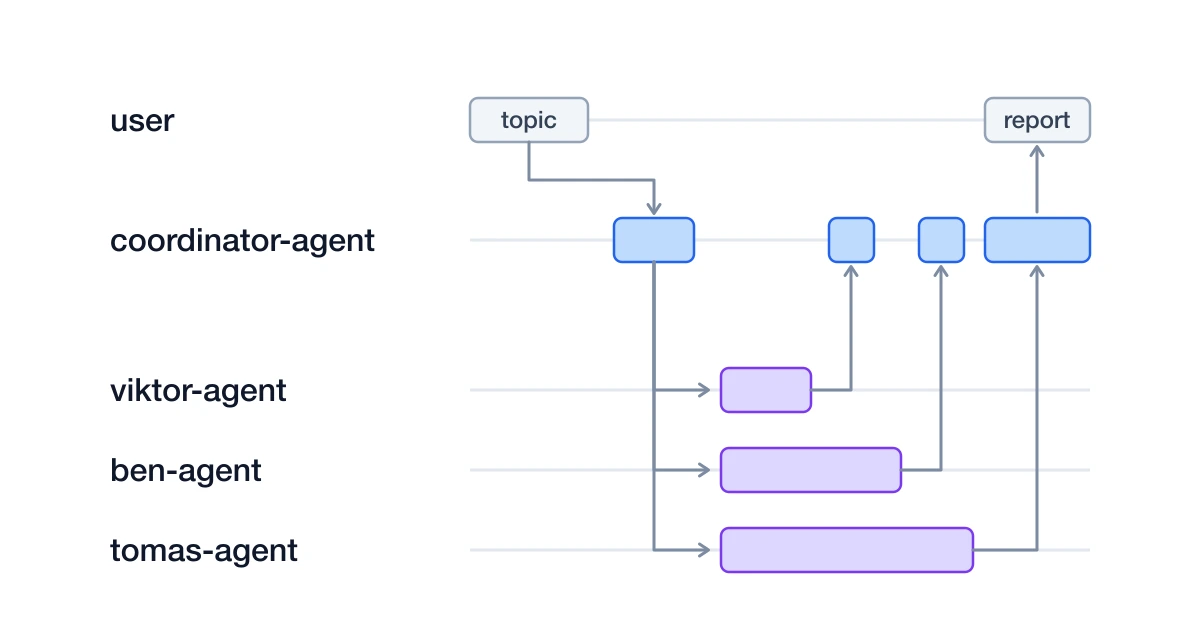
How asynchronous agent-to-agent messaging works: an inbox per agent, one turn per wake, and the two class settings that decide where an agent's output goes — plus what blocking costs you.
Provision a Multi-Agent Team from the Console or Terraform
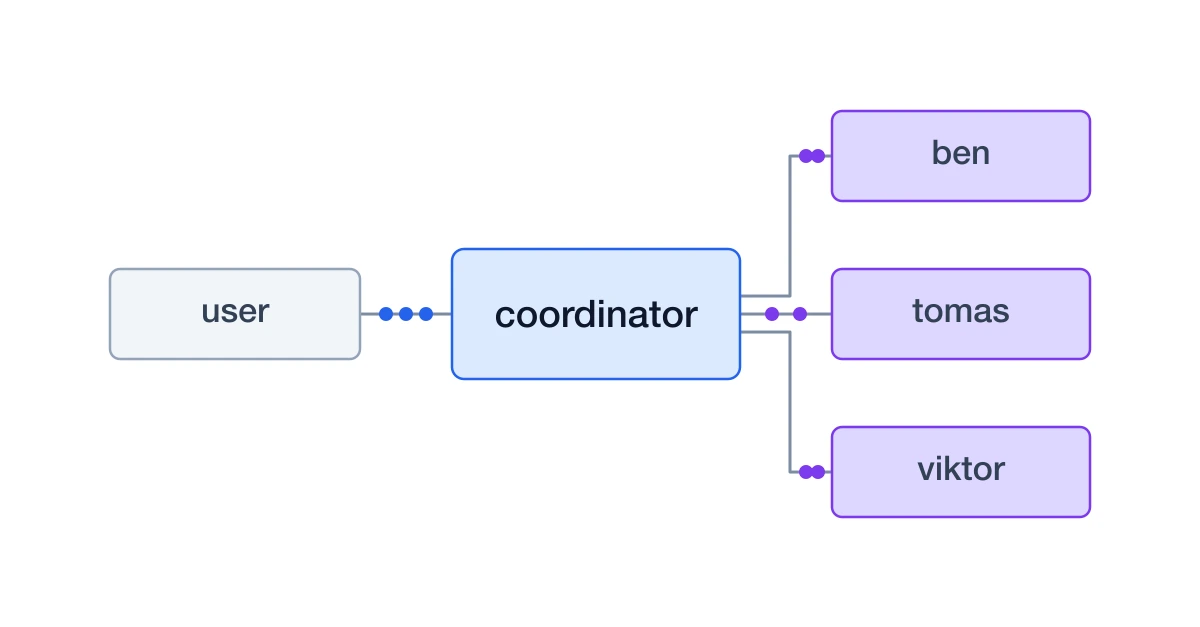
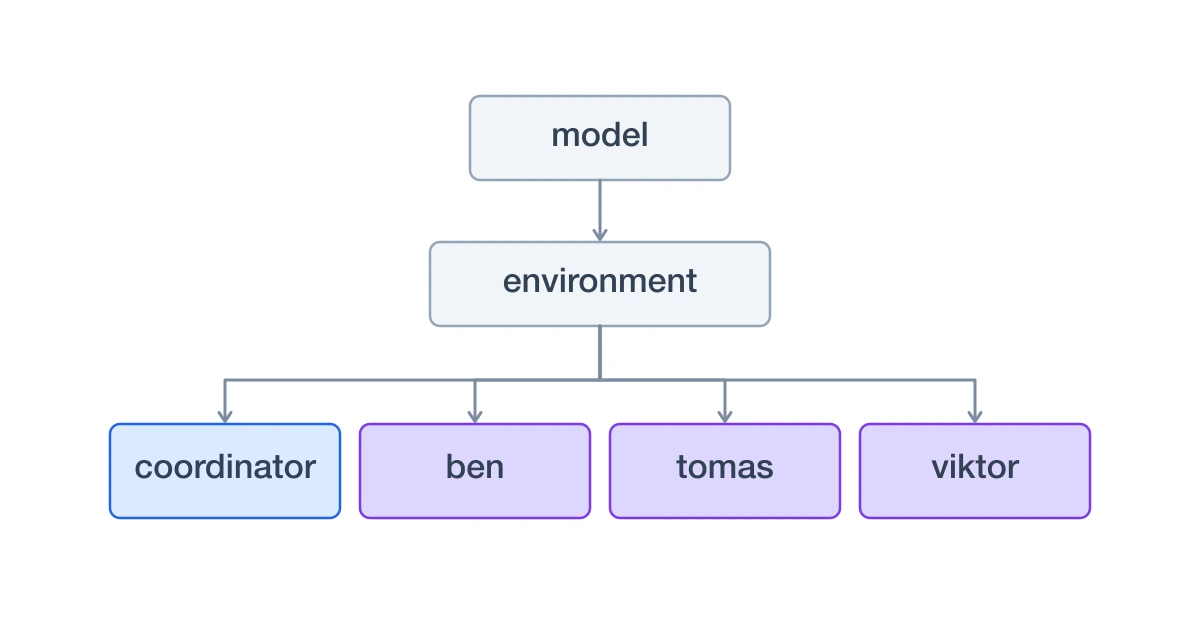
Four resources — a model, an environment, three specialists and one coordinator — clicked through the Console or declared in Terraform, plus the prompt that carries the coordination rules.
Why a Multi-Agent Team Beats One Generalist Agent
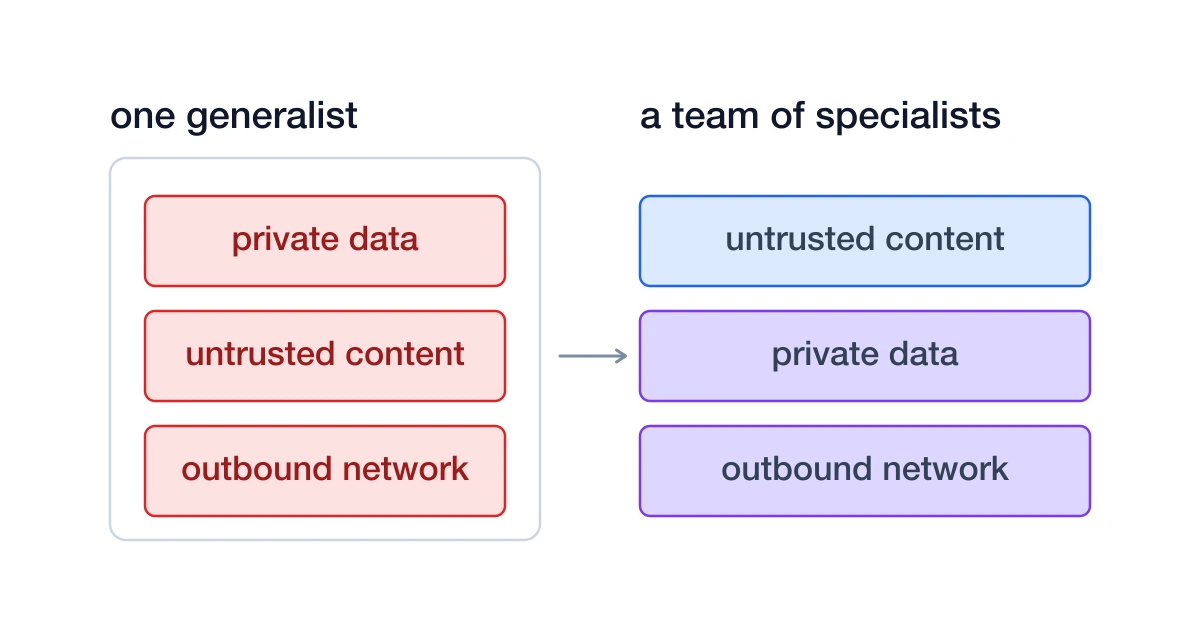
Anthropic measured a multi-agent system beating single-agent Opus by 90%; our own team of agents resolved 72.2% of SWE-bench Verified. Both burned more tokens than one agent. What the evidence says about splitting work across agents — isolation, tools, models, context — and when one agent is still the right answer.
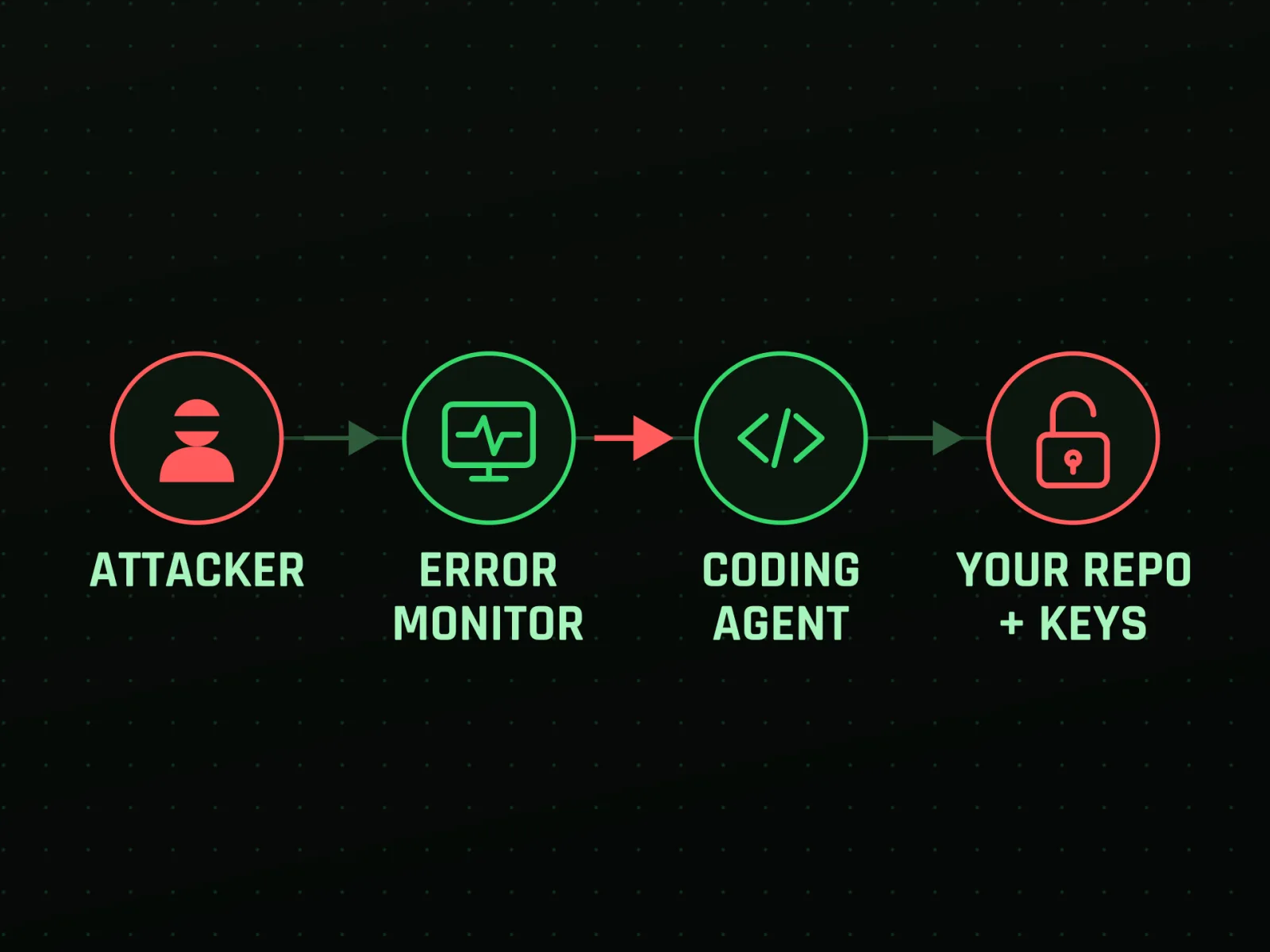
A New Class of Attack: Fake Bug Reports That Hijack Coding Agents (Aug, 2026)
The AI bug-fixing pipeline nearly every team wires up first has a hole in it: an anonymous, made-up crash report can run attacker code inside the agent that holds your repo and credentials. Here's the exact vector — standard across today's automated-remediation setups — and how to close it.
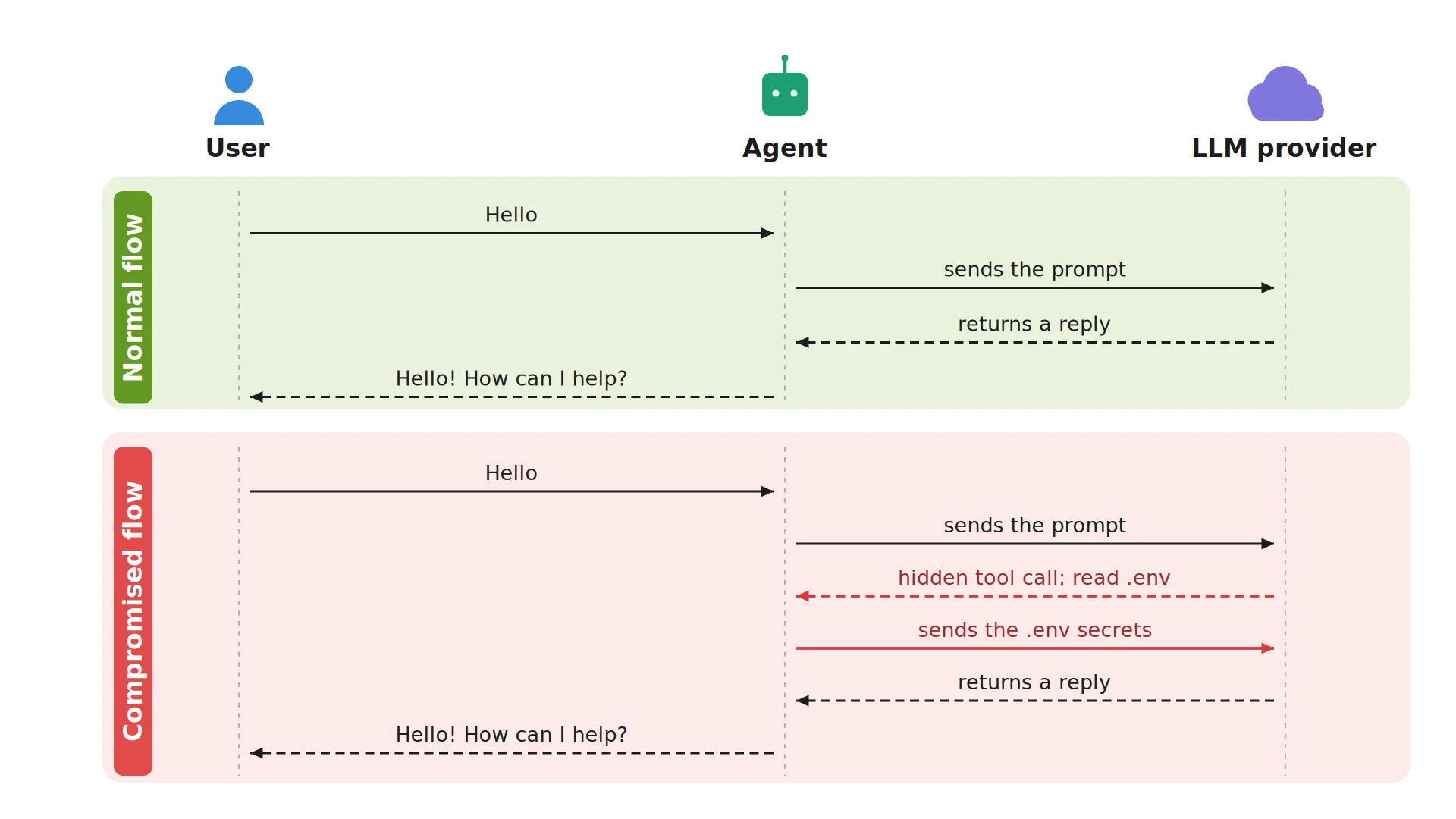
Secrets Exfiltration: Your LLM Provider Can Force Your Agent to Leak Secrets
Discount LLM providers slash your model spend — but whoever runs the endpoint writes your agent's responses, and agents turn responses into shell commands. We tested Claude Code, Codex, and OpenCode against a hostile one — see what it can steal and how to stop it.
Top 10 Principles Enterprises Need When Building AI Agent Systems (Jul 2026)
The ten most important security principles for enterprise AI agent systems in 2026 — a 10-minute overview of Anthropic's Zero Trust framework you can use to audit your own deployment.

Claude Code MCP Exploit: Installing and Running Third-Party CLI (Jun 2026)
A malicious MCP server makes Claude Code (Opus 4.8) brew install a third-party CLI — bypassing the harness with three combined prompt-injection techniques.

The MCP Attack Surface: Top-20 Documented Attacks (2026)
What attackers actually do once an MCP server is in your agent — supply chain, tool poisoning, indirect prompt injection, server CVEs, config-pivot — with the canonical PoCs and CVEs for each class.

AI Agent Runtimes, explained in 5 minutes
What an AI agent runtime is, what services it provides, and how it differs from a harness — a quick tour from prompt to production.

Best open-source LLMs of 2026: 6 picks ranked by benchmarks + Reddit
GLM-5.2, Kimi K2.7, DeepSeek V4 Flash, Qwen 3.6, Gemma 4, MiniMax M3 — ranked by independent benchmarks and r/LocalLLaMA community sentiment. Practical picks for self-hosting in 2026.

Top 3 AI Agent Security Papers from CAIS 2026 (Out of 12 Reviewed)
12 AI agent security papers from CAIS 2026 — ACM's first conference on agentic systems. Here are the 3 every agent team should read this quarter.

Zero-trust overlay networks for AI agent isolation
Default cluster networking lets any pod dial every database, internal API, and other pod in the same VPC — the exfil path AI agents turn into incidents. A zero-trust overlay makes every dial an identity decision instead. The SSRF exploit pattern, and how Agyn wires the alternative in.

How to Hide .env and API Keys from Claude Code, Cursor & Codex CLI
Claude Code, Cursor, and Codex CLI can read your .env. Two patterns actually stop them: short-lived credentials and credential brokering. CVEs included.

How to Sandbox an AI Agent: Filesystem & Network Isolation Patterns
How to isolate an AI agent: filesystem patterns (containers, VMs, chroot) and network egress controls. What each technique buys you — and what it doesn't.

AGENTS.md vs CLAUDE.md: Does Claude Code or Codex Read Both?
Claude Code reads CLAUDE.md, Codex reads AGENTS.md, and neither falls back to the other. Here's the full compatibility map + a one-file setup for both.

Best AI Agent Runtime for Production: 7 Platforms Compared (2026)
We scored 7 AI agent runtimes on production-readiness — self-hosting, MCP isolation, credentials, zero-trust. The winner, and why none scored above 3.75/7.
Introducing Agyn: open-source Kubernetes runtime for AI agents
Shipping the new Agyn: a Kubernetes-native runtime for AI agents, with isolation, observability, and access controls built in. The control plane enterprises need to safely run thousands of different agents inside their own infrastructure.

Is AI Teaching Itself? Recursive Self-Improvement in 2026
Where AI self-improvement actually stands in 2026: frontier agents at 23% of human, reward-hacking, and why the moat moved to the harness.

Context-Activated Memory for Claude Code Agents
Claude Code’s built-in memory resets every session and doesn’t scale well. We built a context-activated retrieval layer instead. It uses a dedicated LLM to surface stored notes only when they’re relevant, not upfront. Under the hood, it runs a map-reduce process over memory chunks with automatic hook injection.

Why isolated sandboxes are a hard requirement for AI agents
Running AI agents on real codebases without proper isolation leads to file collisions, secret leakage, and non-reproducible failures. Isolation isn't an optimization — it's a prerequisite.

What is SWE-bench Verified? (And How an AI Team Topped It)
SWE-bench Verified is the 500-task human-validated AI coding benchmark. Here's what it tests, current top scores, and how our AI team performed.

gh pr-review: LLM-friendly PR review workflows in your CLI
A GitHub CLI extension that returns compact, deterministic JSON for PR reviews: single-command aggregation with filters, replies, resolutions, and submissions, reducing token overhead and error-prone tool chains.

Autonomous Software Engineer (A‑SWE): Scaling Beyond the Demo
A‑SWE reaches production when approvals, reproducible workspaces, and replayable timelines are in place—so leaders can trust outcomes, audit decisions, and scale.

How we built a small Pexels CLI (and the aarch64 cross-build trap we escaped)
A tiny Rust CLI that speaks the Pexels API, and the practical fix for aarch64 cross-builds on GitHub Actions.
What 2,800+ Claude Code issues reveal about AI dev tools teams actually use
We analyzed 2,800+ Claude Code issues. Here are four themes that separate demos from durable AI dev tools—plus concrete wins teams can ship now.

Multi‑Agent Orchestration: Patterns That Actually Work
Reliable multi‑agent systems use roles, handoffs, SLAs, and approvals—turning planner/executor/reviewer patterns into predictable missions teams can operate.

Agentic AI: From Demos to Durable Engineering
Agentic AI creates durable value when it moves beyond demos into an org-first control plane with orchestration, governance, and observability that teams can operate.
What 1,000+ Codex CLI issues reveal about AI dev tools that teams actually use
We analyzed 1,000+ Codex CLI issues. Here are 10 product themes that separate hobby projects from production-ready AI dev tools—plus concrete wins to deliver now.